Monday, March 15, 2010
Enduring Well- Section 121
Friday, March 12, 2010
The Many Lessons Learned From Liberty Jail
This week in Institute we covered the revelations Joseph Smith received while he was incarcerated in Liberty Jail. A portion of these revelations are found in the Doctrine and Covenants in Sections 121,122, and 123. The full transcript of the letter written by Joseph Smith to Edward Partridge and company, which contained these revelations, is found in The History of The Church, Vol. 3. It is very helpful to read the letter in it’s entirety to gain a better perspective on the recorded information in the Doctrine and Covenants. If you are looking for additional insights another great resource is a CES Fireside talk given by Elder Holland called, “Lessons from Liberty Jail”. My next few posts will cover some of this information.
After months of being unfairly imprisoned with unheeded appeals made to the judiciary officials of the state, Joseph Smith and his cell mates, through written communication, wrote an emotional letter to the Saints who had been driven from Far West and had begun to settle in
Joseph writes:
Therefore, dearly beloved brethren, we are the more ready and willing to lay claim to your fellowship and love. For our circumstances are calculated to awaken our spirits to a sacred remembrance of everything, and we think that yours are also, and that nothing therefore can separate us from the love of God and fellowship one with another; and that every species of wickedness and cruelty practiced upon us will only tend to bind our hearts together and seal them together in love. We have no need to say to you that we are held in bonds without cause, neither is it needful that you say unto us, We are driven from our homes and smitten without cause. We mutually understand that if the inhabitants of the state of Missouri had let the Saints alone, and had been as desirable of peace as they were, there would have been nothing but peace and quietude in the state unto this day; we should not have been in this hell, surrounded with demons (if not those who are damned, they are those who shall be damned) and where we are compelled to hear nothing but blasphemous oaths, and witness a scene of blasphemy, and drunkenness and hypocrisy, and debaucheries of every description.
And again, the cries of orphans and widows would not have ascended up to God against them. Nor would innocent blood have stained the soil of
They practice these things upon the Saints, who have done then no wrong, who are innocent and virtuous; who loved the Lord their God, and were willing to forsake all things for Christ’s sake. These things are awful to relate, but they are verily true. It must needs be that offenses come, but woe unto them by whom they come. [HC 3:29091]
As Joseph petitioned the Lord in the first six verses of Section 121, deplorable as his conditions were, he showed that thoughts of the Saints were in his mind and heart. Notice how he prays for “thy people” and then “thy servants” in verse 2.
Doctrine and Covenants 122:1 O God, where art thou? And where is the pavilion that covereth thy hiding place?
2 How long shall thy hand be stayed, and thine eye, yea thy pure eye, behold from the eternal heavens the wrongs of thy people and of thy servants, and thine ear be penetrated with their cries?
3 Yea, O Lord, how long shall they suffer these wrongs and unlawful oppressions, before thine heart shall be softened toward them, and thy bowels be moved with compassion toward them?
Perhaps the worst torment for the captives was the unknown condition of their friends as told by their proclamation, “O that we could be with you, brethren, and unbosom our feelings to you?”
This actual correspondence (which became Sections 121-123) to the Saints was spurred on because of the consoling letters they received while they were in prison. The letters specifically mentioned were from Don Carlos Smith, Bishop Partridge, and Emma Smith.
(Sidebar: Something that I believe deserves comment is the fact that these letters came at a time when these men were at their lowest. Perhaps there are times when we offer consoling words to those who suffer and never fully understand that they were of such great worth. It is important to remember to simply offer those words of encouragement to others when prompted.)
Joseph comments on receiving this news as follows:
We were much gratified with their contents. We had been a long time without information; and when we read those letters they were to our souls as the gentle air is refreshing, but our joy was mingled with grief, because of the sufferings of the poor and much injured Saints.[HC 3:293]
Elder
Just a few days previous to the reception of this revelation Joseph wrote a letter from jail to a Mrs. Norman Bull of Clay County, Missouri. I believe that we can gain wonderful insights into Joseph’s character from some of the excerpts. He wrote:
My heart bleeds continually when I contemplate the distress of the Church. O, that I could be with them! I would not shrink at toil and hardship to render then comfort and consolation.
But trials will only give us the knowledge necessary to understand the minds of the ancients. For my part, I think I never could have felt as I now do, if I had not suffered the wrongs that I have suffered.
I know that something will soon take place to stir up this generation to see what they have been doing, and that their fathers have inherited lies and they have been led captive by the devil, to no profit; but they know not what they do. Do not have any feelings of enmity towards any son or daughter of Adam. I believe I shall be let out of their hands some way or another, and shall see good days. We cannot do anything only stand still and see the salvation of God. He must do His own work, or it must fall to the ground. We must not take it in our hands to avenge our wrongs. [HC3:286]
I believe that Joseph felt love for the Saints in exile and compassion for those who persecuted them as well. It is apparent to me that the fact that he longed for justice to be served by the Lord illustrated the condition of his heart and his humble nature. He not only was willing to love “his neighbor”, which was part of the Mosaic Law but was willing to live the higher law as taught by Jesus Christ.
Matthew 5:43 Ye have heard that it hath been said, Thou shalt love thy neighbour, and hate thine enemy.
44 But I say unto you, Love your enemies, bless them that curse you, do good to them that hate you, and pray for them which despitefully use you, and persecute you;
45 That ye may be the children of your Father which is in heaven: for he maketh his sun to rise on the evil and on the good, and sendeth rain on the just and on the unjust.
46 For if ye love them which love you, what reward have ye? do not even the publicans the same?
Still in his petition for justice from the Lord, Joseph understood that vengeance only belonged to the Lord.
Deuteronomy 32:35 To me belongeth vengeance, and recompence; their foot shall slide in due time: for the day of their calamity is at hand, and the things that shall come upon them make haste.43 Rejoice, O ye nations, with his people: for he will avenge the blood of his servants, and will render vengeance to his adversaries, and will be merciful unto his land, and to his people.
Jeremiah 20:11 But the Lord is with me as a mighty terrible one: therefore my persecutors shall stumble, and they shall not prevail: they shall be greatly ashamed; for they shall not prosper: their everlasting confusion shall never be forgotten. 12 But, O Lord of hosts, that triest the righteous, and seest the reins and the heart, let me see thy vengeance on them: for unto thee have I opened my cause.
Doctrine and Covenants 121:5 Let thine anger be kindled against our enemies; and, in the fury of thine heart, with thy sword avenge us of our wrongs. 6 Remember thy suffering saints, O our God; and thy servants will rejoice in thy name forever.
From these very few examples we can see the three lessons learned that Elder Holland speaks of very clearly.
1) Everyone faces trying times.
2) Even the worthy will suffer.
3) Remain calm, patient, charitable and forgiving.
Joseph Smith and those incarcerated with him showed “majesty” even while they were being held captive. I believe, as Joseph did, that he “never could have felt” the things he felt “had he not suffered the wrongs” he did. It is often during the hardest trials faced that we come to learn the lesson that “all things shall work together for good to them that love God.” Perhaps this knowledge will help us when trials come...because they will come.
Tuesday, March 9, 2010
Tithing and Other Offerings, Our Choice
It is simply between you and the Lord.
Monday, March 8, 2010
Consecration and "Divine Discontent"
Despite what some may believe, I have always had a firm belief that the Law of Consecration has never been rescinded, or taken away, and the command of the 10% tithe given instead. It is comforting to know I am not alone in my thoughts. A wonderful article written by Steven C. Harper, called “All Things Are the Lord’s: The Law of Consecration in the Doctrine and Covenants” shares many of the same observations I have had. I highly recommend that you read it in its entirety.
President Gordon B. Hinckley taught that “the law of sacrifice and the law of consecration were not done away with and are still in effect.” Elder Neal A. Maxwell stated, “Many ignore consecration because it seems too abstract or too daunting. The conscientious among us, however, experience divine discontent.” I certainly believe both of these statements are true.
Steven C. Harper addresses an issue he calls “folk memory” among Latter-day Saints in the above mentioned talk. This “folk memory” allows for the teachings such as; “tithing is the lower law, while consecration is the higher law”, “tithing is the preparatory law for the law of consecration”, and “tithing is in force until we are asked to live the law of Consecration once again.” Harper explains, “No revelations in the Doctrine and Covenants rescind, suspend, or revoke the law of consecration. The Doctrine and Covenants never refers to a higher or a lower law, only the law. Indeed, the revelations do not speak of the laws of God as we do of bills before the legislature, as subject to passage, veto, or amendment. Rather, they speak of the laws of God as eternal. The law, in other words, was revealed to Joseph Smith in February 1831, but the law itself simply has been, is, and ever will be. Consecration is the law of the celestial kingdom, and section 78 teaches that no one will receive an inheritance there who has not obeyed the law (see D&C 78:7).”
The only place where one might receive the impression that tithing replaces consecration is found in the section heading found in the Doctrine and Covenants for Section 119. It states, “Because of failure on the part of many to abide by this covenant, the Lord withdrew it for a time, and gave instead the law of tithing to the whole Church.” I believe caution must be exercised when relying on this statement as sole instruction on the matter.
Likewise in the same section heading a definition of tithing is extremely pertinent to understand, as it applies to the amount required as a tithe. It states, “The law of tithing, as understood today, had not been given to the Church previous to this revelation. The term “tithing” in the prayer just quoted and in previous revelations (64: 23; 85: 3; 97: 11) had meant not just one-tenth, but all free-will offerings, or contributions, to the Church funds. The Lord had previously given to the Church the law of consecration and stewardship of property, which members (chiefly the leading elders) entered into by a covenant that was to be everlasting.” The previous statement, about the law of Consecration being “withdrawn”, compared with this statement describing it as “everlasting” causes a bit of a conflict for some.
When I read all the references to tithes in the Old Testament with the understanding that the Lord is referring to “free will offerings” of a consecrated nature, it sheds a new light on what is actually required for the “windows of Heaven to open”.
Perhaps some historical background on Section 119 of the Doctrine and Covenants may be of benefit at this point. When Section 119 was received the saints had just been removed from both Clay County, Missouri, and Kirtland
Doctrine and Covenants 115:13 Verily I say unto you, let not my servant Joseph, neither my servant Sidney, neither my servant Hyrum, get in debt any more for the building of a house unto my name;
14 But let a house be built unto my name according to the pattern which I will show unto them.
This command, to be debt free, presented a dilemma for the Saints. On the one hand, they were to make building the Temple a priority, yet on the other, they needed to find a way to finance it, this time without going into debt as they did in Kirtland. They had come to
Notice what the Lord requires and what he labels the requirement:
Doctrine and Covenants 119:1 Verily, thus saith the Lord, I require all their surplus property to be put into the hands of the bishop of my church in
2 For the building of mine house, and for the laying of the foundation of
3 And this shall be the beginning of the tithing of my people.
I believe that “all their surplus” is another way of restating the Law of Consecration. If that is the case, then the “Law” is also referred to as a “tithe” like explained in the section heading. The problem herein lies that the Saints barely had enough to survive, consequently there was very little, if any, surplus.
The Lord very specifically states that after the required law is met then an added sacrifice is required:
Doctrine and Covenants 119:4 And after that, those who have thus been tithed shall pay one-tenth of all their interest annually; and this shall be a standing law unto them forever, for my holy priesthood, saith the Lord.
5 Verily I say unto you, it shall come to pass that all those who gather unto the
I believe that the 10% is an additional requirement to the Law of Consecration, requiring us to “sacrifice” some of our “wants and needs”. Just think of this, Consecration is required of all, but is paid in times of abundance; tithing is the same amount for all, to be paid in time of need thus requiring all to sacrifice. For me, this sheds a different light on which offering could actually be labeled “higher or lower”. This understanding certainly raises some “divine discontent” for me.
“What, then, the conscientious covenant keeper wants to know, does the Lord expect? What does it mean in the twenty-first century to comply with the law of consecration? What is meant by ambiguous terms in the law, like residue, sufficient, more than is necessary, wants, and amply supplied? The carefully worded law clearly teaches principles, not dogma. It gives knowledge of the Lord's will without coercion or compulsion. It enables anyone to become "anxiously engaged in a good cause, and do many things of their own free will, and bring to pass much righteousness; for the power is in them, wherein they are agents unto themselves. And inasmuch as men do good they shall in nowise lose their reward. But he that doeth not anything until he is commanded, and receiveth a commandment with doubtful heart, and keepeth it with slothfulness, the same is damned" (D&C 58:27-29). Put another way, words like sufficient leave stewardship and therefore accountability where it belongs. Ironically, they compel us to exercise our agency and act for ourselves. We decide what they mean in terms of amounts of time or money, because we are the empowered stewards accountable to the Lord for our use or abuse of what is rightfully His.” Steven C. Harper
"In pondering and pursuing consecration," said Elder Neal A. Maxwell, "understandably we tremble inwardly at what may be required. Yet the Lord has said consolingly, 'My grace is sufficient for you' (D&C 17:8). Do we really believe Him? He has also promised to make weak things strong (Ether 12:27). Are we really willing to submit to that process? Yet if we desire fulness, we cannot hold back part!"
The only way I see tithing as a “preparatory” law is that it corresponds with the Law of Sacrifice. This starts us out on our journey to consecrate all. Both are required to enter His presence.
Wednesday, March 3, 2010
Kirtland Temple Endowment
I must add one last post to the “visions in the
Imagine Moses, Elias and Elijah laying their hands upon your head to give you a blessing. First, Moses blesses you with the ability to gather with your family to the
Now that you have entered into the New and Everlasting Covenant, which includes eternal marriage, Elijah confirms these blessings with a seal that cannot be broken, a “welding link.” Then, as a final blessing, because you have proven faithful at all hazards, Elijah seals upon you the fulness of the priesthood, which in the ultimate sense means that he seals you up unto eternal life; that is, Elijah makes everything with which you have been blessed more sure.
Now, because of your righteousness, Elijah extends to you a promise for your children. The promise is this: As you turn your heart to your children, their hearts will turn to you and the Covenant that you have entered into. Elijah’s blessing guarantees to you that no matter what happens in time or eternity, these children are yours. Then, when Elias and Elijah finish their blessing upon your head, the Savior steps forward, and he receives you into his embrace. You are home at last, and your spouse and your children are there with you.
These blessings restored once again to the earth through the prophets, Moses, Elias, and Elijah are priceless gifts to all of Heavenly Father’s children. They start with the individual, and are then extended to their family. Ultimately, through the three fold mission of the Church, they will benefit the whole human family throughout all time.
“It is easy to see how all three of these manifestations have funded the Church's understanding of and authority to perform its mission. "The three-fold mission of the Church is to perfect the saints, proclaim the gospel and redeem the dead [and it] has one central goal, and this is to bring souls unto Christ" (Church News, October 10, 1987, 21; also Elder James E. Faust, Ensign, March 1988, 70). Moses' authority facilitates the gathering. Once gathered, Elias's restoration enables the perfecting. Once gathered and progressing toward perfection, Elijah's keys inspire us to serve our dead — "approach[ ing ] the vicarious sacrifice of the Savior himself" — by providing for them that which they cannot do for themselves. "For their salvation is necessary and essential to our salvation, as Paul says concerning the fathers — that they without us cannot be made perfect — neither can we without our dead be made perfect" (D&C 128:15). It is in these glorious restored temples that all of the blessings our Father has seen fit to reveal to us can be received in their fulness.” Phillip Allred
The
Doctrine and Covenants 110:9 Yea the hearts of thousands and tens of thousands shall greatly rejoice in consequence of the blessings which shall be poured out, and the endowment with which my servants have been endowed in this house.
10 And the fame of this house shall spread to foreign lands; and this is the beginning of the blessing which shall be poured out upon the heads of my people. Even so. Amen.
How have you been blessed personally by the events that happened at Kirtland?
Tuesday, March 2, 2010
Elijah and the Sealing Keys
For as long as I can remember I have pondered the question, “Why Elijah?” I have never really figured out why Elijah was chosen as the prophet to be the Elias to the coming of the Savior, Jesus Christ. I have wondered exactly why Elijah was given the responsibility of the keys of the Sealing power and the job of restoring them in the
The final vision that occurred in the
Joseph Smith History 1:38 And again, he quoted the fifth verse thus: Behold, I will reveal unto you the Priesthood, by the hand of Elijah the prophet, before the coming of the great and dreadful day of the Lord.
39 He also quoted the next verse differently: And he shall plant in the hearts of the children the promises made to the fathers, and the hearts of the children shall turn to their fathers. If it were not so, the whole earth would be utterly wasted at his coming.
This became the first recorded “official” revelation in the Doctrine and Covenants and is now found in Section 2 of that book. Placed only after the “Lord’s Preface” of the upcoming work, or Section 1, this revelation was a prophecy of landmark importance.
Jewish tradition also places an important emphasis on the prophet Elijah. An empty chair and a cup of wine are provided at each Passover celebration in anticipation of his return and he is known to them as the “angel of the covenant”. It is interesting to note that according to the actual Jewish calendar, Elijah did return when the Jews expected him to, during the Passover celebration, to the temple in Kirtland.
Doctrine and Covenants 110:13 After this vision had closed, another great and glorious vision burst upon us; for Elijah the prophet, who was taken to heaven without tasting death, stood before us, and said:
14 Behold, the time has fully come, which was spoken of by the mouth of Malachi—testifying that he [Elijah] should be sent, before the great and dreadful day of the Lord come—
15 To turn the hearts of the fathers to the children, and the children to the fathers, lest the whole earth be smitten with a curse—
16 Therefore, the keys of this dispensation are committed into your hands; and by this ye may know that the great and dreadful day of the Lord is near, even at the doors.
I love the label given to Elijah as “angel of the covenant”. The covenant that is being referenced is the New and Everlasting Covenant, or the renewal of the Abrahamic Covenant. I more fondly refer to this covenant as the PPL because of the blessings promised in consequence of obedience to the conditions set by the Lord, which are eternal PRIESTHOOD, endless POSTERITY, and a LAND inheritance. To me, this is a beautiful description of becoming like God.
Just like the experiences Abraham had, which were progressive in nature, we too can “walk with God” and become like him. I believe this progression is seen in a pattern of prophet, priest, and finally king, semblance of order. Obviously the pinnacle of progression is that of king and queen, where one is ruler of their own kingdom. The “kingly” status is congruent with that of Godly status, when given by one with authority, or one who holds the keys to “seal or bind” those blessings to the individuals. The ancient Egyptians had a similar thought process, in that Pharaoh, who was their king, was also considered a God. Unfortunately they were acting out of order, or without the proper authority to confer those blessings on the individual, but you get the picture. I believe Elijah was the one chosen to temporarily hold the keys which would seal the ordinances of this life, and allow them to continue, or to be in effect, into our next estate allowing for the realization of the promised blessings of royalty.
Elder James E Talmage spoke of this process, “The patriarchal order is a condition where woman shares with man the blessings of the Priesthood, where husband and wife minister, seeing and understanding alike, and cooperating to the full in the government of their family kingdom. A man cannot hold this priesthood without a wife, and a woman cannot share the blessings of this priesthood without a husband, sealed in the temple.”
The sealing keys that revealed the “fulness of the Melchizedek Priesthood” authorized the blessings attained in this life, the extended efficacy needed for the next life. They allowed for the fullness of temple covenants and ordinances to be performed, extending beyond the veil and linking the hearts of the children to their fathers who had gone on before. In this manner a “welding link” was placed in the long line, or chain of family, or royal birthright, through a priesthood line, linking back to Adam.
Elder McConkie wrote:
That same day (April 3, 1836) ‘Elias appeared, and committed the “dispensation of the gospel of Abraham,” meaning the great commission given to Abraham that he and his seed had a right to the priesthood, the gospel, and eternal life. Accordingly, Elias promised those upon whom these ancient promises were then renewed that in them and in their seed all generations should be blessed. (D&C 110:12-16.) Thus, through the joint ministry of Elijah, who brought the sealing power, and Elias, who restored the marriage discipline of Abraham, the way was prepared for the planting in the hearts of the children of the promises made to the fathers. (D&C 2:2.) These are the promises of eternal life through the priesthood and the gospel and celestial marriage.
But why Elijah...again I can only speculate... perhaps Elijah was the last prophet to preside during the Royal Davidic line, or worthy men who received the King/Priest status. Solomon was the last King who was also a priest, leaving an unrighteous posterity to rule in his place. Perhaps those keys to “Kingship” were then taken in a “chariot of fire” to be guarded until a rightful King/Priest would reign. This rightful heir would be Jesus Christ himself. These keys, rights, and powers would of necessity be bestowed once again on the Mount of Transfiguration. Once again Elijah has returned to herald the coming of the King/Priest who will rule and reign in glory this time. The one who made the realization of the blessings we have been promised, a possibility. I believe that this is the mission of Elijah. Our hearts have been turned.
Thursday, February 25, 2010
Elias and The Gospel of Abraham
Doctrine and Covenants 110:12 After this, Elias appeared, and committed the dispensation of the gospel of Abraham, saying that in us and our seed all generations after us should be blessed.
Many people get side tracked at this point with who Elias is, the opinions on this are varied and diverse, but I feel it is more important to talk about what Elias did. It is interesting to me that there is no mention of “keys” in this portion of the vision, the word “dispensation” is used to describe the interaction that took place. A definition of dispensation is “a general state or ordering of things; specifically: a system of revealed commands and promises regulating human affairs.” I love this definition because when I hear the word order, I automatically think of ordinance.
Elder Bruce R. McConkie explains how the gospel is dispensed:
“Whenever the Lord reveals the plan of salvation anew so that men do not have to rely solely upon prior dispensings from heaven of the same glories and wonders, it is called a dispensation of the gospel. This may or may not involve a restoration of keys and powers and priesthoods. It did when Jesus came to replace the Mosaic dispensation, for instance, but not when the dispensations of Enoch and Noah were ushered in.
We do not know how many dispensations there have been, probably dozens or scores; nor can we be certain how long each lasted, or how one dispensation blended into another. For the present we know only that a gracious God has made his saving truths available at those times and under those circumstances, when men were prepared to receive them.”
I believe that Elias came to reveal, or show, the order of Abraham, or more fully instruct them on the Abrahamic Covenant, here referred to as the gospel of Abraham.
Perhaps at this point it might be interesting to note some historical events that took place immediately preceding the visit of Elias. Just prior to the completion and dedication of the
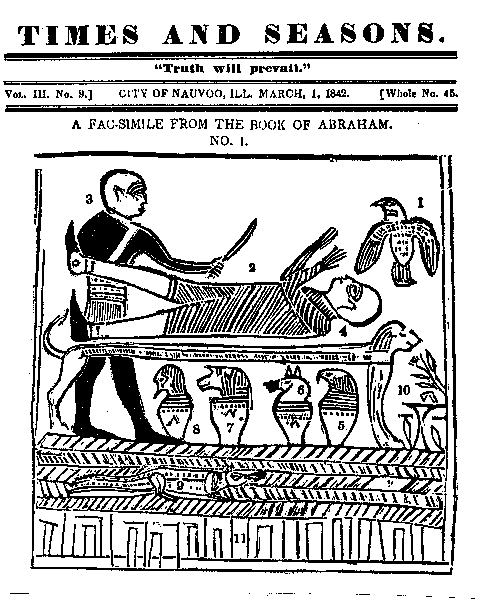
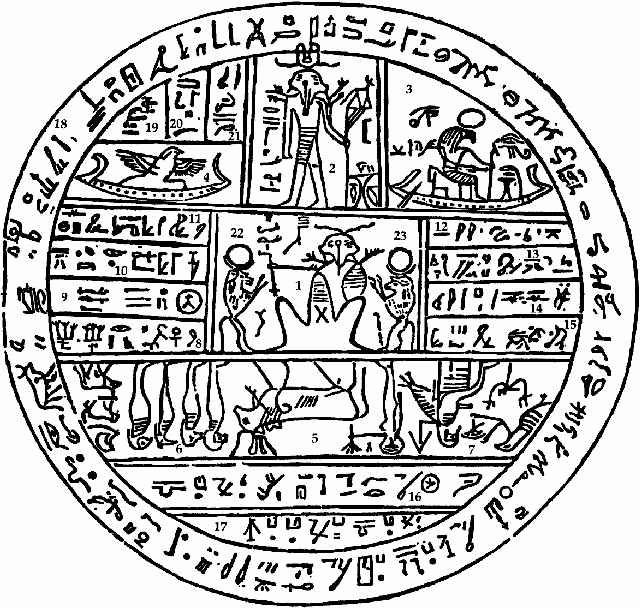
The scrolls were purchased and Oliver Cowdery and W. W. Phelps, acting as scribes, went to work with Joseph Smith to translate them. Joseph Smith commented, “And much to our joy we found that one of the rolls contained the writings of Abraham, another the writings of Joseph of Egypt.” Oliver Cowdery, in a written letter to a friend stated that the language of the ancient record was very comprehensive and the hieroglyphics exceedingly striking. He noticed that the writers of the scrolls were acquainted with the creation, the fall of man, and their creator. He wrote, “The representation of the Godhead, three, yet in one, is curiously drawn to give simply, though impressively, the writer’s views of the exalted personage.” He went on to describe this information as “an inestimable acquisition to our present scriptures, fulfilling in a small degree the word of the Prophet: ‘for the earth shall be full of the knowledge of the Lord as the waters cover the sea.’” Today we have some of this work recorded in The Pearl of Great Price, known as The Book of Abraham.
Isn’t it interesting that as the saints were busy working on completing the temple, the Prophet was busy learning about the Gospel of Abraham as recorded by Abraham himself?
In the words of Abraham:
Abraham 1:2 And, finding there was greater happiness and peace and rest for me, I sought for the blessings of the fathers, and the right whereunto I should be ordained to administer the same; having been myself a follower of righteousness, desiring also to be one who possessed great knowledge, and to be a greater follower of righteousness, and to possess a greater knowledge, and to be a father of many nations, a prince of peace, and desiring to receive instructions, and to keep the commandments of God, I became a rightful heir, a High Priest, holding the right belonging to the fathers.
3 It was conferred upon me from the fathers; it came down from the fathers, from the beginning of time, yea, even from the beginning, or before the foundation of the earth, down to the present time, even the right of the firstborn, or the first man, who is Adam, or first father, through the fathers unto me.
4 I sought for mine appointment unto the Priesthood according to the appointment of God unto the fathers concerning the seed.
This must have sounded hauntingly familiar to Joseph Smith because this was about the same process that happened to him.
What comes next is priceless:
Abraham 1: 18 Behold, I will lead thee by my hand, and I will take thee, to put upon thee my name, even the Priesthood of thy father, and my power shall be over thee.
19 As it was with Noah so shall it be with thee; but through thy ministry my name shall be known in the earth forever, for I am thy God.
If that isn't filled with Temple symbolism, I don't know what is!
Elder Bruce R. McConkie described the gospel of Abraham as:
The authorization to use the priesthood to perfect eternal family units, even as this commission and covenant was had by Abraham and those who followed him (Millennial Messiah, 119).
Obviously it was the commission, the mission, the endowment and power, the message of salvation, given to Abraham. Thus the gospel of Abraham was one of celestial marriage. And as a consequence, the righteous among all future generations were assured of the blessings of a continuation of the seeds forever, even as it was with Abraham of old (D&C 132.). (Mormon Doctrine, 219-20).
I think I like how Phillip Allred summed it up:
"In sum, the gospel of Abraham amounts to having access to the blessings of exaltation that he and his immediate posterity have already achieved (see D&C 132:29, 37). This gospel, interestingly named after this mortal model (see Abraham 1:18-19), has the power to perfect its adherents and exalt them. Much like the Melchizedek priesthood bears its name (D&C 107:2-4), this gospel of Abraham is none other than the fulness of the gospel of Jesus Christ."
The keys of the Melchizedek priesthood had already been restored by Peter, James, and John, which allowed access to the blessings of the Gospel of Abraham or the fulness of the gospel of Jesus Christ. I believe the return of Elias simply showed Joseph Smith and Oliver Cowdery, and each one of us vicariously, where and how we fit into that Patriarchal lineage or plan of salvation.
With that in mind... perhaps Elias is really a title. Perhaps Joseph and Oliver were so cryptic about this “Elias” because it was a combination of individuals sent to reveal the order, or place that Joseph holds as a dispensation head. For me it doesn’t really matter. What does matter is that this Elias restored the Patriarchal order or revealed our right to our “endowment” from the Fathers. This was the promise made to them and to us.