Showing posts with label Abrahamic Covenant. Show all posts

Monday, August 9, 2010

The Lord Tested Nephi 1 Nephi 3-4

"When a man has offered in sacrifice all that he has for the truth's sake, not even withholding his life, and believing before God that he has been called to make this sacrifice, because he seeks to do his will, he does know most assuredly that God does and will accept his sacrifice and offering, and that he has not nor will not seek his face in vain. Under these circumstances then, he can obtain the faith necessary for him to lay hold on eternal life. It is in vain for persons to fancy to themselves that they are heirs with those, or can be heirs with them, who have offered their all in sacrifice, and by this means obtained faith in God and favor with him so as to obtain eternal life, unless they in like manner offer unto him the same sacrifice, and through that offering obtain the knowledge that they are accepted of him." Lectures on Faith
There are many reasons why Nephi was justified in killing Laban. The first and foremost reason is that the Lord commanded it. Some have correlated it with the direction given in Section 98 of the Doctrine and Covenants, which addresses the Lord’s laws governing the persecutions and afflictions imposed on his people. According to these directions the death of Laban would have been justified. I have written earlier about some of my thoughts regarding the law of judgment, which I believe is another reason that Nephi was justified in slaying Laban. I believe that we are shown how Laban pronounced the judgment on a thief and a robber as death, and when he robbed Lehi’s sons of their property, and became a thief himself, had already decided his own fate. Just recently however, I have seen this experience as a way for Nephi to be proven. This test was given to him by the Lord.

It is important to remember that Nephi followed the correct steps to gain a testimony for himself. (1 Nephi 2:16) Once he “knew” for himself, he then testified to his father Lehi of the truths he knew. (1 Nephi 3:7).
Look for what Lehi “knew” because of this testimony given by Nephi:
1 Nephi 3:8 And it came to pass that when my father had heard these words he was exceedingly glad, for he knew that I had been blessed of the Lord.
Remember the word “blessed” is a key word for entering into the Abrahamic Covenant. (1 Nephi 2:19-24) Lehi knew that Nephi had been blessed simply by Nephi’s testimony because it was something that he had experienced himself. It is apparent that Lehi had also been “blessed” of the Lord.
The account in Chapter 3 records that the brothers made three attempts to get the records from Laban. It is interesting to note that after the first failed attempt Laman and Lemuel were ready to go back home. We can attribute this fact to their level of commitment, or in other words, what motivated them to obey in the first place, which was fear. When the fear of Laban became greater than their fear of their father, or the Lord, their first response was to flee and give up the task. This is a lesson in itself for us. Nephi, who received a greater testimony of the principle of obedience, followed a different path.
The record shows a progression of commitment that Nephi exhibits in the following verse:
1 Nephi 3:15 But behold I said unto them that: As the Lord liveth, and as we live, we will not go down unto our father in the wilderness until we have accomplished the thing which the Lord hath commanded us.
It is interesting to note that the terminology “As the Lord liveth” is the wording used when swearing by an oath. The same wording is used later when Nephi swears his oath to Zoram. (1 Nephi 4:32). Not only has Nephi a great testimony of obedience to the Lord, he now has taken a greater step and entered into a covenant to obey the Lord. We progress in the same manner. We learn of a truth, and covenant to keep that truth. It is because of Nephi’s willingness to enter into a binding covenant, or oath, that the Lord provides a way for him to prove that he is willing to “put his money where his mouth is”, so to speak.
After the second failed attempt, Nephi was “led by the Spirit, not knowing beforehard the things which he should do.” It is at this point that Laban is delivered into Nephi’s hand and Nephi is given a test.
Look for how he feels about this test:
1 Nephi 4:10 And it came to pass that I was constrained by the Spirit that I should kill Laban; but I said in my heart: Never at any time have I shed the blood of man. And I shrunk and would that I might not slay him.
I bet Abraham had some of the same feelings as he prepared to take his son Isaac as an offering to the Lord. What do you think?
In the following verses Nephi has a reasoning session with the Spirit about the task he is required to do. Notice what he remembers that finally motivates him to obey:
1 Nephi 4:11 And the Spirit said unto me again: Behold the Lord hath delivered him into thy hands. Yea, and I also knew that he had sought to take away mine own life; yea, and he would not hearken unto the commandments of the Lord; and he also had taken away our property.
12 And it came to pass that the Spirit said unto me again: Slay him, for the Lord hath delivered him into thy hands;
13 Behold the Lord slayeth the wicked to bring forth his righteous purposes. It is better that one man should perish than that a nation should dwindle and perish in unbelief.
14 And now, when I, Nephi, had heard these words, I remembered the words of the Lord which he spake unto me in the wilderness, saying that: Inasmuch as thy seed shall keep my commandments, they shall prosper in the land of promise.
15 Yea, and I also thought that they could not keep the commandments of the Lord according to the law of Moses, save they should have the law.
16 And I also knew that the law was engraven upon the plates of brass.
17 And again, I knew that the Lord had delivered Laban into my hands for this cause—that I might obtain the records according to his commandments.
18 Therefore I did obey the voice of the Spirit, and took Laban by the hair of the head, and I smote off his head with his own sword.
Nephi remembers his experience with the “Lord in the wilderness” wherein he gained a testimony, and was “blessed” of the Lord because of his efforts. You know, the experience he had back in 1 Nephi, chapter 2. Nephi was taught by the spirit, entered into a covenant, which allowed him to prove himself to the Lord, and was now ready, because of his faithfulness, to receive further instruction from the Lord. He is ready to part the veil and receive further light and knowledge. This completely fits the pattern set by Alma, which we learned of in this post, in learning the “mysteries of Heaven”.
This test also allowed Nephi to receive power from the Lord. In fact, I believe that this Abrahamic test allowed Nephi to experience the gift of the sealing power. From this point on in his record, Nephi speaks as if the Lord were speaking himself. His word has become the word of the Lord, in other words, the power is in his word.
In just the first few chapters of the record of Nephi we are shown deep gospel truths that are necessary for us to know so that we too can experience these same blessings as Nephi. I absolutely love the Book of Mormon. More great things to come.......

Friday, August 6, 2010

Nephi's Land of Promise 1 Nephi 2

Like I previously stated, I believe that 1 Nephi, Chapter 2 establishes the groundwork for the entire rest of the Book of Mormon.
We have seen how Nephi recorded the pattern for gaining a sure testimony from the Lord, through his Holy Spirit, by his righteous desire and humble request. We have also been shown the progression of prophet, priest, and king, needed to arrive at a “blessed” position from the Lord. We have been given the definition of “blessed” as that of the Abrahamic Covenant, or the PPL, eternal priesthood, eternal posterity and a land inheritance. And finally, we are shown specifically that Nephi’s posterity are the ones who are given this land of promise because of Nephi’s righteous actions. (We will explore this further in the next few chapters.)
Let me explain that last statement. Through the blessing that Nephi received from the Lord, he is led to a land of promise that was prepared for him above all other lands, for his posterity for eternity. This land IS Nephi’s land inheritance.

Notice that at this point the blessing is conditional upon one thing; look for what that condition is:
1 Nephi 2:20 And inasmuch as ye shall keep my commandments, ye shall prosper, and shall be led to a land of promise; yea, even a land which I have prepared for you; yea, a land which is choice above all other lands.
21 And inasmuch as thy brethren shall rebel against thee, they shall be cut off from the presence of the Lord.
22 And inasmuch as thou shalt keep my commandments, thou shalt be made a ruler and a teacher over thy brethren.
Just like Abraham, the blessing Nephi will receive is conditional based on his righteous obedience to the Lord. He is required to “keep his commandments” and for that he will be blessed with all that the Lord promised. As long as Nephi proves himself to the Lord showing that he is trustworthy so that the Lord may have confidence in him, he will retain these blessings forever.
That message is clearly taught from the Lord:
Doctrine and Covenants 121:45 Let thy bowels also be full of charity towards all men, and to the household of faith, and let virtue garnish thy thoughts unceasingly; then shall thy confidence wax strong in the presence of God; and the doctrine of the priesthood shall distil upon thy soul as the dews from heaven.
46 The Holy Ghost shall be thy constant companion, and thy scepter an unchanging scepter of righteousness and truth; and thy dominion shall be an everlasting dominion, and without compulsory means it shall flow unto thee forever and ever.
Nephi must be “proven” to make his blessing sure, which I believe he does. We will explore that process too. However, part of that sure blessing is this land inheritance.
Notice how the Lord will use the rebellious as a tool. Who are the rebellious? What is the tool for? What are the seed of Nephi to remember?
1 Nephi 2:23 For behold, in that day that they (meaning his brothers seed) shall rebel against me, I will curse them even with a sore curse, and they (meaning his brothers seed) shall have no power over thy seed except they (meaning Nephi’s seed) shall rebel against me also.
24 And if it so be that they (meaning Nephi’ seed) rebel against me, they (meaning his brothers seed) shall be a scourge unto thy seed, to stir them up in the ways of remembrance.
The unrighteous will be a tool in the Lord’s hand to stir the righteous up to remember the covenant He made with Nephi. That covenant is the Abrahamic Covenant that we just read about when the Lord referred to Nephi as being “Blessed”. That is what the righteous are to remember. (Side Note: Anytime we see the wording “blessed” we should return to Chapter 2 to be reminded of just what that means.)
This was the same manner in which the Lord used the different groups of people, to “stir up” the memory of the House of Israel in Jerusalem, when He used the Assyrians, the Babylonians, and the Persians as a tool to try and help them remember the Lord. These groups were not righteous, they were simply used as a tool to help the Lord’s chosen people humble themselves, return to the Lord again, and benefit from the blessings of the covenant.
Simply stated, the Lord uses the unrighteous to remind His covenant people to be righteous and claim their blessings.
We are taught a very important message in Chapter 2... and that message is that this land belongs to the remnant of Nephi’s seed, in other words Lehi’s righteous posterity.
Can you think of what Nephi’s Abrahamic test, to make this blessing sure, might have been?

Thursday, August 5, 2010

Nephi, Prophet, Priest, and King 1 Nephi 2

In some of my previous posts I have discussed the ascension pattern that can be seen when one progresses in the gospel of Jesus Christ. I believe that the steps, or rungs on the ladder, include a noticeable progression of passing from prophet, to priest, and ultimately to king.
To summarize, I believe that a simple way to think of this progression is: a prophet is one who has been given the testimony of Jesus Christ and can testify of Him, a priest is one who administers to others on behalf of Jesus Christ (such as the priests in the tabernacle and temple), and a king is when one has reached a level to be given all that the Father hath. With each level of progression there are more covenants made and, consequently, blessings given. In the language of priesthood ascension it can be termed, Aaronic, Melchizedek, and finally, Patriarchal.
That said, I believe that these certain patterns can be seen in the accounts we have of the lives of the prophets in not only Old and New Testament times, but Book of Mormon times too. Lehi and Nephi are the first we encounter in the Book of Mormon which teach us of the significance of this pattern. I believe that we would see Lehi’s experience more clearly if we had the record he created available to us, unfortunately we don’t have that information but thankfully we can see the progression clearly taught in Nephi’s record too.
Previously we discussed the process Nephi experienced to gain a testimony like his fathers as explained to us in 1 Nephi 2:16.
It is interesting to see what Nephi does as soon as he receives his testimony because of the “visit” with the Lord:
1 Nephi 2:17 And I spake unto Sam, making known unto him the things which the Lord had manifested unto me by his Holy Spirit. And it came to pass that he believed in my words.
I believe that this is an example of Nephi exhibiting the prophet stage of his progression, as he testifies of Jesus Christ.
Look what he does next:
1 Nephi 2:18 But, behold, Laman and Lemuel would not hearken unto my words; and being grieved because of the hardness of their hearts I cried unto the Lord for them.
In his statement that he “cried unto the Lord for them” he raises to the priest level wherein he “administers on behalf of others”.
At this point the Lord pours out a blessing upon Nephi because of his diligence, and humility. Notice the terminology the Lord uses:
1 Nephi 2:19 And it came to pass that the Lord spake unto me, saying: Blessed art thou, Nephi, because of thy faith, for thou hast sought me diligently, with lowliness of heart.
20 And inasmuch as ye shall keep my commandments, ye shall prosper, and shall be led to a land of promise; yea, even a land which I have prepared for you; yea, a land which is choice above all other lands.
21 And inasmuch as thy brethren shall rebel against thee, they shall be cut off from the presence of the Lord.
22 And inasmuch as thou shalt keep my commandments, thou shalt be made a ruler and a teacher over thy brethren.
I believe that the blessing the Lord gives to Nephi is the same blessing he gave to Abraham. That blessing or covenant involves eternal posterity, eternal priesthood, and a land inheritance. I call that the PPL.
Look closely for that blessing in the following wording:
“ye shall prosper”- one with a large posterity was considered prosperous
“a land which I have prepared for you”- a land inheritance
“a ruler and a teacher over thy brethren”- this involves the blessing of priesthood
Because the Lord pronounced Nephi as “Blessed” with these blessings he is elevated to the level of king. A true king is simply a ruler and teacher.
From the very beginning of the Book of Mormon we are taught of this progression. This progression is the same one we all must go through to receive the blessings of the Abrahamic Covenant.
Now remember the pattern that was given in my last post... where do you think we are, as far as that pattern goes, in Nephi’s progression?

Tuesday, March 2, 2010

Elijah and the Sealing Keys

For as long as I can remember I have pondered the question, “Why Elijah?” I have never really figured out why Elijah was chosen as the prophet to be the Elias to the coming of the Savior, Jesus Christ. I have wondered exactly why Elijah was given the responsibility of the keys of the Sealing power and the job of restoring them in the Kirtland Temple on April 3, 1836. Perhaps I will never really know for sure, but I have gained some insights through study that I would like to share.

The final vision that occurred in the Kirtland Temple was one that was anticipated from the very beginning of the restoration process. As early as September 21, 1823 the angel Moroni appeared to the prophet Joseph Smith and quoted the prophet Malachi who was referring to Elijah’s role in the latter days.

Joseph Smith History 1:38 And again, he quoted the fifth verse thus: Behold, I will reveal unto you the Priesthood, by the hand of Elijah the prophet, before the coming of the great and dreadful day of the Lord.

39 He also quoted the next verse differently: And he shall plant in the hearts of the children the promises made to the fathers, and the hearts of the children shall turn to their fathers. If it were not so, the whole earth would be utterly wasted at his coming.

This became the first recorded “official” revelation in the Doctrine and Covenants and is now found in Section 2 of that book. Placed only after the “Lord’s Preface” of the upcoming work, or Section 1, this revelation was a prophecy of landmark importance.

Jewish tradition also places an important emphasis on the prophet Elijah. An empty chair and a cup of wine are provided at each Passover celebration in anticipation of his return and he is known to them as the “angel of the covenant”. It is interesting to note that according to the actual Jewish calendar, Elijah did return when the Jews expected him to, during the Passover celebration, to the temple in Kirtland.

Doctrine and Covenants 110:13 After this vision had closed, another great and glorious vision burst upon us; for Elijah the prophet, who was taken to heaven without tasting death, stood before us, and said:

14 Behold, the time has fully come, which was spoken of by the mouth of Malachi—testifying that he [Elijah] should be sent, before the great and dreadful day of the Lord come—

15 To turn the hearts of the fathers to the children, and the children to the fathers, lest the whole earth be smitten with a curse—

16 Therefore, the keys of this dispensation are committed into your hands; and by this ye may know that the great and dreadful day of the Lord is near, even at the doors.

I love the label given to Elijah as “angel of the covenant”. The covenant that is being referenced is the New and Everlasting Covenant, or the renewal of the Abrahamic Covenant. I more fondly refer to this covenant as the PPL because of the blessings promised in consequence of obedience to the conditions set by the Lord, which are eternal PRIESTHOOD, endless POSTERITY, and a LAND inheritance. To me, this is a beautiful description of becoming like God.

Just like the experiences Abraham had, which were progressive in nature, we too can “walk with God” and become like him. I believe this progression is seen in a pattern of prophet, priest, and finally king, semblance of order. Obviously the pinnacle of progression is that of king and queen, where one is ruler of their own kingdom. The “kingly” status is congruent with that of Godly status, when given by one with authority, or one who holds the keys to “seal or bind” those blessings to the individuals. The ancient Egyptians had a similar thought process, in that Pharaoh, who was their king, was also considered a God. Unfortunately they were acting out of order, or without the proper authority to confer those blessings on the individual, but you get the picture. I believe Elijah was the one chosen to temporarily hold the keys which would seal the ordinances of this life, and allow them to continue, or to be in effect, into our next estate allowing for the realization of the promised blessings of royalty.

Elder James E Talmage spoke of this process, “The patriarchal order is a condition where woman shares with man the blessings of the Priesthood, where husband and wife minister, seeing and understanding alike, and cooperating to the full in the government of their family kingdom. A man cannot hold this priesthood without a wife, and a woman cannot share the blessings of this priesthood without a husband, sealed in the temple.”

The sealing keys that revealed the “fulness of the Melchizedek Priesthood” authorized the blessings attained in this life, the extended efficacy needed for the next life. They allowed for the fullness of temple covenants and ordinances to be performed, extending beyond the veil and linking the hearts of the children to their fathers who had gone on before. In this manner a “welding link” was placed in the long line, or chain of family, or royal birthright, through a priesthood line, linking back to Adam.

Elder McConkie wrote:

That same day (April 3, 1836) ‘Elias appeared, and committed the “dispensation of the gospel of Abraham,” meaning the great commission given to Abraham that he and his seed had a right to the priesthood, the gospel, and eternal life. Accordingly, Elias promised those upon whom these ancient promises were then renewed that in them and in their seed all generations should be blessed. (D&C 110:12-16.) Thus, through the joint ministry of Elijah, who brought the sealing power, and Elias, who restored the marriage discipline of Abraham, the way was prepared for the planting in the hearts of the children of the promises made to the fathers. (D&C 2:2.) These are the promises of eternal life through the priesthood and the gospel and celestial marriage.

But why Elijah...again I can only speculate... perhaps Elijah was the last prophet to preside during the Royal Davidic line, or worthy men who received the King/Priest status. Solomon was the last King who was also a priest, leaving an unrighteous posterity to rule in his place. Perhaps those keys to “Kingship” were then taken in a “chariot of fire” to be guarded until a rightful King/Priest would reign. This rightful heir would be Jesus Christ himself. These keys, rights, and powers would of necessity be bestowed once again on the Mount of Transfiguration. Once again Elijah has returned to herald the coming of the King/Priest who will rule and reign in glory this time. The one who made the realization of the blessings we have been promised, a possibility. I believe that this is the mission of Elijah. Our hearts have been turned.

Thursday, February 25, 2010

Elias and The Gospel of Abraham

Joseph Smith described the third vision that he and Oliver Cowdery witnessed in the Kirtland Temple on April 3, 1836 in a more cryptic manner. It simply states:

Doctrine and Covenants 110:12 After this, Elias appeared, and committed the dispensation of the gospel of Abraham, saying that in us and our seed all generations after us should be blessed.

Many people get side tracked at this point with who Elias is, the opinions on this are varied and diverse, but I feel it is more important to talk about what Elias did. It is interesting to me that there is no mention of “keys” in this portion of the vision, the word “dispensation” is used to describe the interaction that took place. A definition of dispensation is “a general state or ordering of things; specifically: a system of revealed commands and promises regulating human affairs.” I love this definition because when I hear the word order, I automatically think of ordinance.

Elder Bruce R. McConkie explains how the gospel is dispensed:

“Whenever the Lord reveals the plan of salvation anew so that men do not have to rely solely upon prior dispensings from heaven of the same glories and wonders, it is called a dispensation of the gospel. This may or may not involve a restoration of keys and powers and priesthoods. It did when Jesus came to replace the Mosaic dispensation, for instance, but not when the dispensations of Enoch and Noah were ushered in.

We do not know how many dispensations there have been, probably dozens or scores; nor can we be certain how long each lasted, or how one dispensation blended into another. For the present we know only that a gracious God has made his saving truths available at those times and under those circumstances, when men were prepared to receive them.”

I believe that Elias came to reveal, or show, the order of Abraham, or more fully instruct them on the Abrahamic Covenant, here referred to as the gospel of Abraham.

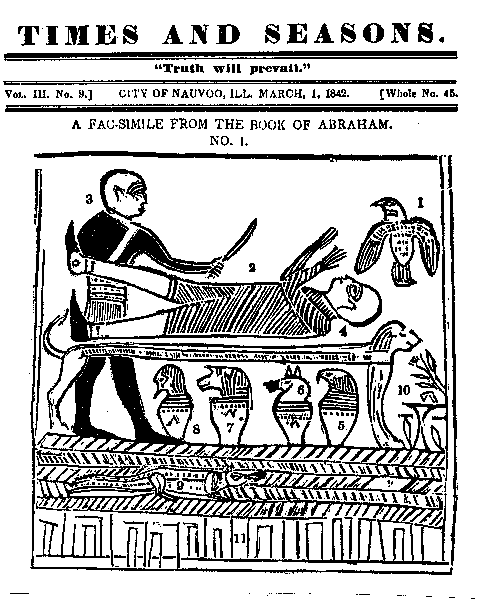
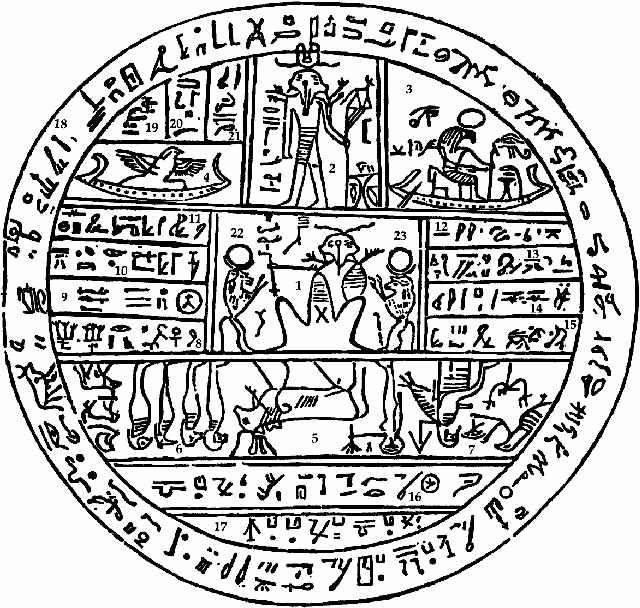
Perhaps at this point it might be interesting to note some historical events that took place immediately preceding the visit of Elias. Just prior to the completion and dedication of the Kirtland Temple, an unusual experience happened in the community where the Saints lived. A man by the name of Michael H. Chandler arrived at the home of Joseph Smith with three papyrus scrolls, which he found in the caskets of four mummies he had acquired from a distant relative. Again, rather than discuss the details and validity regarding Chandler and his possession of these mummies, I would like to focus on the timing and the content of what these scrolls contained.

The scrolls were purchased and Oliver Cowdery and W. W. Phelps, acting as scribes, went to work with Joseph Smith to translate them. Joseph Smith commented, “And much to our joy we found that one of the rolls contained the writings of Abraham, another the writings of Joseph of Egypt.” Oliver Cowdery, in a written letter to a friend stated that the language of the ancient record was very comprehensive and the hieroglyphics exceedingly striking. He noticed that the writers of the scrolls were acquainted with the creation, the fall of man, and their creator. He wrote, “The representation of the Godhead, three, yet in one, is curiously drawn to give simply, though impressively, the writer’s views of the exalted personage.” He went on to describe this information as “an inestimable acquisition to our present scriptures, fulfilling in a small degree the word of the Prophet: ‘for the earth shall be full of the knowledge of the Lord as the waters cover the sea.’” Today we have some of this work recorded in The Pearl of Great Price, known as The Book of Abraham.

Isn’t it interesting that as the saints were busy working on completing the temple, the Prophet was busy learning about the Gospel of Abraham as recorded by Abraham himself?

In the words of Abraham:

Abraham 1:2 And, finding there was greater happiness and peace and rest for me, I sought for the blessings of the fathers, and the right whereunto I should be ordained to administer the same; having been myself a follower of righteousness, desiring also to be one who possessed great knowledge, and to be a greater follower of righteousness, and to possess a greater knowledge, and to be a father of many nations, a prince of peace, and desiring to receive instructions, and to keep the commandments of God, I became a rightful heir, a High Priest, holding the right belonging to the fathers.

3 It was conferred upon me from the fathers; it came down from the fathers, from the beginning of time, yea, even from the beginning, or before the foundation of the earth, down to the present time, even the right of the firstborn, or the first man, who is Adam, or first father, through the fathers unto me.

4 I sought for mine appointment unto the Priesthood according to the appointment of God unto the fathers concerning the seed.

This must have sounded hauntingly familiar to Joseph Smith because this was about the same process that happened to him.

What comes next is priceless:

Abraham 1: 18 Behold, I will lead thee by my hand, and I will take thee, to put upon thee my name, even the Priesthood of thy father, and my power shall be over thee.

19 As it was with Noah so shall it be with thee; but through thy ministry my name shall be known in the earth forever, for I am thy God.

If that isn't filled with Temple symbolism, I don't know what is!

Elder Bruce R. McConkie described the gospel of Abraham as:

The authorization to use the priesthood to perfect eternal family units, even as this commission and covenant was had by Abraham and those who followed him (Millennial Messiah, 119).

Obviously it was the commission, the mission, the endowment and power, the message of salvation, given to Abraham. Thus the gospel of Abraham was one of celestial marriage. And as a consequence, the righteous among all future generations were assured of the blessings of a continuation of the seeds forever, even as it was with Abraham of old (D&C 132.). (Mormon Doctrine, 219-20).

I think I like how Phillip Allred summed it up:

"In sum, the gospel of Abraham amounts to having access to the blessings of exaltation that he and his immediate posterity have already achieved (see D&C 132:29, 37). This gospel, interestingly named after this mortal model (see Abraham 1:18-19), has the power to perfect its adherents and exalt them. Much like the Melchizedek priesthood bears its name (D&C 107:2-4), this gospel of Abraham is none other than the fulness of the gospel of Jesus Christ."

The keys of the Melchizedek priesthood had already been restored by Peter, James, and John, which allowed access to the blessings of the Gospel of Abraham or the fulness of the gospel of Jesus Christ. I believe the return of Elias simply showed Joseph Smith and Oliver Cowdery, and each one of us vicariously, where and how we fit into that Patriarchal lineage or plan of salvation.

With that in mind... perhaps Elias is really a title. Perhaps Joseph and Oliver were so cryptic about this “Elias” because it was a combination of individuals sent to reveal the order, or place that Joseph holds as a dispensation head. For me it doesn’t really matter. What does matter is that this Elias restored the Patriarchal order or revealed our right to our “endowment” from the Fathers. This was the promise made to them and to us.

Saturday, May 16, 2009

What is The Oath and Covenant of the Priesthood?

Where do you find the actual "Oath and Covenant" of the Priesthood?
Who makes the covenant?
Who takes an oath?
Why is it called the “oath and covenant of the Priesthood”?

These and many more questions plagued me the first year I taught Doctrine and Covenants in early morning seminary. I had come to Section 84 where the Lord outlined the beautiful patriarchal order of the priesthood, but still could not find the answers. In Section 84 we are instructed regarding the blessings for obtaining and magnifying the priesthood.

Section 84:33 For whoso is faithful unto the obtaining these two priesthoods of which I have spoken, and the magnifying their calling, are sanctified by the Spirit unto the renewing of their bodies.

34 They become the sons of Moses and of Aaron and the seed of Abraham, and the church and kingdom, and the elect of God.

35 And also all they who receive this priesthood receive me, saith the Lord;

36 For he that receiveth my servants receiveth me;

37 And he that receiveth me receiveth my Father;

38 And he that receiveth my Father receiveth my Father’s kingdom; therefore all that my Father hath shall be given unto him.

39 And this is according to the oath and covenant which belongeth to the priesthood.


It even refers to the “oath and covenant of the priesthood”, but still not a clue is given to what is meant by that terminology. I asked everyone I could find, and believe it or not, the answers I got would surprise you. The funniest one I think I got was, “That is just what they call it!” These questions were never fully answered until I was privileged to teach Old Testament. Among the “sealed portion” of the scriptures, known as the Joseph Smith Translation in the book of Genesis chapter 14, Joseph Smith adds back 15 additional verses that containing the plain and precious truths lost to the world concerning the “Oath and Covenant of the Priesthood.”

Some background information leading up to this point: Lot, Abraham’s nephew had just been captured by a league of five kings who were in the surrounding area of Sodom where Lot dwelt. Abraham formed a group of men to go and battle these kings and rescue Lot. With the Lord on the side of righteousness, Abraham who was still at this point known as Abram, was successful and conquered their enemies. He subsequently had received goods referred to as “spoil” because of the conquest. Instead of keeping it for himself, he went to pay “tithes of all” to Melchizedek, the king of Salem. Joseph Smith then adds back this beautiful description of Melchizedek and the priesthood which he holds.

As you read the following verse... look for who specifically makes the oath.


25 And Melchizedek lifted up his voice and blessed Abram.

26 Now Melchizedek was a man of faith, who wrought righteousness; and when a child he feared God, and stopped the mouths of lions, and quenched the violence of fire.

27 And thus, having been approved of God, he was ordained an high priest after the order of the covenant which God made with Enoch,

28 It being after the order of the Son of God; which order came, not by man, nor the will of man; neither by father nor mother; neither by beginning of days nor end of years; but of God;

29 And it was delivered unto men by the calling of his own voice, according to his own will, unto as many as believed on his name.

30 For God having sworn unto Enoch and unto his seed with an oath by himself; that every one being ordained after this order and calling should have power, by faith, to break mountains, to divide the seas, to dry up waters, to turn them out of their course;

31 To put at defiance the armies of nations, to divide the earth, to break every band, to stand in the presence of God; to do all things according to his will, according to his command, subdue principalities and powers; and this by the will of the Son of God which was from before the foundation of the world.

32 And men having this faith, coming up unto this order of God, were translated and taken up into heaven.

33 And now, Melchizedek was a priest of this order; therefore he obtained peace in Salem, and was called the Prince of peace.

34 And his people wrought righteousness, and obtained heaven, and sought for the city of Enoch which God had before taken, separating it from the earth, having reserved it unto the latter days, or the end of the world;

35 And hath said, and sworn with an oath, that the heavens and the earth should come together; and the sons of God should be tried so as by fire.

36 And this Melchizedek, having thus established righteousness, was called the king of heaven by his people, or, in other words, the King of peace.

37 And he lifted up his voice, and he blessed Abram, being the high priest, and the keeper of the storehouse of God;

38 Him whom God had appointed to receive tithes for the poor.

39 Wherefore, Abram paid unto him tithes of all that he had, of all the riches which he possessed, which God had given him more than that which he had need.

40 And it came to pass, that God blessed Abram, and gave unto him riches, and honor, and lands for an everlasting possession; according to the covenant which he had made, and according to the blessing wherewith Melchizedek had blessed him.


God, who swore by Himself, made the oath. Suddenly the words in Section 84:40 became more meaningful to me, “Therefore, all those who receive the priesthood, receive this oath and covenant of my Father, which he cannot break, neither can it be moved.” His promises are sure, least He cease to be God. He has sworn by an oath, that the covenants entered into are made sure by that eternal power called the priesthood. We are simply made beneficiaries of that covenant by obedience to the terms. The terms He has set are to make Him our God, submitting all that we have to him. If we can do that... the promises are sure.

After all God swore by an oath.

Friday, May 15, 2009

Queen of Alll Things Awe-Summ!!!

When Nancy from the Blog Something Marvellous sent me the notice that she had awarded me the most coveted Queen of Alll things Awe-Summm award I simply chuckled and thought to myself, she doesn’t know me very well, does she! LOL But then I simply took a moment to ponder this award as a symbol as it applied to a very important gospel principle. The principle I am thinking of is that of the importance of covenants.

As a member of the LDS Church who has entered into the Temple and made covenants with the Lord, I have actually been given the possibility of this award, as set by the terms of the covenant. This covenant, formally named the Abrahamic Covenant, outlines the terms of the relationship of the Father with the children of Abraham, requiring those who wish Him to be their God, to “walk with Him” in obedience to His Word. In reward for this submission of will, the Father has promised all that He has.

To receive the award, or for symbolic purposes the promise of being the “Queen of all things awesome”, I must simply bind the Lord, or hold Him to his word, by my obedience to my end of the deal. I really do have the potential to become literally a “Queen of all things awesome”, and a priestess by right. This thought is boggling to my mind at times, but therein lies my hope as well. Perhaps Nancy does know me better than I think!

So to all my female friends and fellow saints who have entered into sacred covenants, I award this honor of someday being Queen of Alll things Awe-Summm, but until then, this cute honor, to remind us to be obedient, must suffice!

Here are the rules:

List 7 things that make you Awe-Summ and then pass the award on to bloggers. Make sure to tag your recipients and let them know they know. Also link back to the QUEEN that tagged you.

1) I am a daughter of God and a member of The Church of Jesus Christ of Latter Day Saints.

2) I understand my divine role as wife and mother and am thankful to be both.

3) One of my favorite things to do is study the scriptures, especially with "study buddies."

4) I am a Family History freak! I love to do genealogy...really anybodies!

5) I belong to a Young Adult Branch even though I am a "Old Dog".

6) I love spending time in The Doghouse, real and virtual.

7) It is easy for me to love others, and I am a "hugger".

I guess it is now my turn to pass on the crown....but my Queenly friends have made it clear it is to stop here!

Sunday, March 29, 2009

Sarah, A Woman of Sacrifice

We are reminded all the time of the sacrifice of Abraham and his willingness to be obedient to the Lord, but in remembering him we must remember his wife Sarah also. Sarah's life is one of sacrifice; it was filled with continual tests or trials, which as she proved faithful and obedient, resulted in blessings without number.

The first sacrifice Sarah faced required her to leave her home and family and “cleave” unto her husband, as they both left the familiar surroundings of Ur, to travel by faith to an unknown land. Arriving in the land of Canaan during a time of great famine, they were then required to journey onward still into Egypt for sustenance. Before they were to enter into the area of Egypt, Sarah was instructed that it would be safer for Abraham if she relinquished her title as wife, and become a sister to him to save him from death.

Sarah’s willingness to sacrifice even her precious virtue to Pharaoh if need be, so that Abraham could live, served as an example of consecration in marriage in the fullest sense. She was blessed for her obedience as she was allowed to leave Egypt with her husband with her virtue unscathed. In fact, she and Abraham left Egypt with far more substance than they had when they arrived; they received riches, through the Lord, in abundance from Pharaoh himself.

The Lord had covenanted with Abraham and promised him that through his lineage would continue a “royal priesthood”, and that his posterity would be “as numerous as the sands of the seashore.” Yet, after 24 years of marriage, Abraham still had no seed by Sarah. At the age of seventy-five, knowing that the years of her child bearing possibilities had passed, Sarah learned another great lesson of sacrifice. Putting her heart on the altar she submitted her will in offering her handmaid Hagar as another in her stead, to fulfill the promise of an heir to Abraham, made by the Lord. Because of her willingness to consecrate her all, this time to the Lord, she was blessed with the miracle birth of Isaac.

It is evident that Sarah became a great “mother of nations” as we come to know the character of Isaac himself, more fully through the experience he has with Abraham and his willingness to become the sacrifice to the Lord. Isaac’s unquestioning submission to the will of both his earthly father, and his Heavenly Father, confirms the fact that Sarah had taught him the ways of the Lord. He knew and understood the importance of the law of sacrifice, which Sarah had a firm testimony of herself. That testimony of sacrifice entitled her to the same blessings as Abraham in the eternities to come.

The fullness of glory is given to Sarah as Abraham becomes “a covering of the eyes” or a veil for her. This beautiful honor of a veiled faced showed that Sarah was given a place in the kingdom, not only of the earth but of heaven too. Abraham's blessing of priesthood, posterity, and a land inheritance was to be shared equally with this beautiful woman, Sarah.

Wednesday, February 4, 2009

S.Michael Wilcox Speaks On The Abrahamic Covenant

As if you have not had enough of me writing about the Abrahamic Covenant, I decided to post the following link:

S. Michael Wilcox in his 1998 Ensign article titled, The Abrahamic Covenant gives one of the most comprehensive discourses on the subject I have seen in one place.

Wilcox stresses the fact that we are given patriarchal blessings solely to distinguish our lineage, as one from the house of Abraham. This lineage allows for each of us as his children, or descendants, to collect on the promises made to him, our father. It is a wonderful transition to the revelation given in Section 2 of the Doctrine and Covenants which is literally the very next teaching the prophet Joseph Smith receives following his First Vision.

I hope you enjoy the article as much as I did!

Monday, February 2, 2009

The Promises of The Abrahamic Covenant

Understanding the terms of the covenant relationship that we share with our Heavenly Father allows us to then live up to our end of the deal more completely. After all, how can we commit to do something that we don’t really understand, right?


Our Father in Heaven requires the submission of our will and the proof of our obedience by the actions we choose, to show that we are willing to make him our God. This law of obedience and sacrifice is the first step on the journey we make as we “walk with Him” in this life. We sacrifice our will and obey his voice.


This requirement is not one that is without its own rewards. The blessings we receive because of faithfulness to the terms we enter into by abiding by this Abrahamic Covenant can be summed up in three simple areas. They are easily remembered by assigning letters to them, such as PPL.


The first P represents the promise of eternal POSTERITY. This is given to Abraham as the Lord makes the promise to him to “make thy seed as the sand of the sea, which cannot be numbered for multitude.” This might be more easily understood to mean eternal increase.


The next P represents the great blessing of eternal PRIESTHOOD to be held from generation to generation in the family line. This priesthood is the authority to act in the name of God. It is the same priesthood that was used to create worlds without number.


Finally, the L stands for the LAND inheritance that is promised to those who are faithful to the conditions of the covenant. Just as Abraham was promised certain land in consequence of his willingness to obey and sacrifice, we too will indeed be given that blessing of a land inheritance, not only in the blessing of living with him but also in the creations of worlds of our own.


The blessings of the Abrahamic Covenant known as the PPL simply describes the potential we have of becoming like our Father in Heaven and having all that he has. These promises are “sure” or in other words guaranteed already, the only variable in the equation depends on us. We must be willing to live up to the terms set by the Lord as we covenant to obey this great LAW OF SACRIFICE. As we do, we find our life is filled with blessings so great; we cannot have room enough to receive them!


Abrahamic Covenant: I will be your God, you will be my people; walk with me.

Promises or Blessings for obedience to the terms of the covenant:

P- Eternal POSTERITY, or eternal increase.

P- Eternal PRIESTHOOD, or power

L- LAND inheritance, or worlds

Summary: If we are obedient to the covenants we make then we can have all that the Father has.


Isn’t it really very simple after all?

Saturday, January 31, 2009

The Old Covenant and The New and Everlasting Covenant

I love the Gospel, or “Good News” of Jesus Christ and the simplicity of it. As I have begun teaching from the Doctrine and Covenants this year I have found how simply beautiful the doctrine and principles of His Gospel are for each of us to understand and embrace.

I am thankful for the past year of study I have had solely in the first five books of Moses in the Old Testament. It has given me a greater understanding of the covenant relationship we have with our Father in Heaven and Jesus Christ. With that foundational understanding I have been allowed to see the relationship the “Old Covenant” has with the “New and Everlasting Covenant” of today.

What exactly is the “Old Covenant” I am referring to?

Many people term the “Old Covenant” as the Abrahamic Covenant. That has been somewhat confusing to me at times, because the covenant was originally made with Adam, renewed with Enoch, Noah, and so forth throughout all the dispensation heads. I have often wondered why it was not labeled the Adamic Covenant, since it truly began with Adam, but I guess that is food for thought for another post, right?

My intended purpose for writing this post is to express my thoughts of WHAT the covenant, or as we call it, Abrahamic Covenant, really is. For simplicity I have broken it down in this way:

A covenant is a two way promise between God and man, with God setting the terms. Applied to that promise are blessings or consequences for how well you live up to your end of the “contract”. God always lives up to His end of the deal that is why He is God.

The actual promise is really very simple. God has stated that “If you will make me your God, then I will make you my people, therefore walk with me.”

Leviticus 26:3-12

3 If ye walk in my statutes, and keep my commandments, and do them;

4 Then I will give you rain in due season, and the land shall yield her increase, and the trees of the field shall yield their fruit.

5 And your threshing shall reach unto the vintage, and the vintage shall reach unto the sowing time: and ye shall eat your bread to the full, and dwell in your land safely.

6 And I will give peace in the land, and ye shall lie down, and none shall make you afraid: and I will rid evil beasts out of the land, neither shall the sword go through your land.

7 And ye shall chase your enemies, and they shall fall before you by the sword.

8 And five of you shall chase an hundred, and an hundred of you shall put ten thousand to flight: and your enemies shall fall before you by the sword.

9 For I will have respect unto you, and make you fruitful, and multiply you, and establish my covenant with you.

10 And ye shall eat old store, and bring forth the old because of the new.

11 And I will set my tabernacle among you: and my soul shall not abhor you.

12 And I will walk among you, and will be your God, and ye shall be my people.

IF we make Him our God we must learn to “walk with Him”. What exactly does that entail really? I have spent much time pondering that question, and have found that it is really as simple as learning to be obedient and being willing to sacrifice. This life is given to us so that we may learn to walk. How easy that learning process is, is our own choice, but ultimately we will all learn to walk.

If we choose not to “walk the walk” patterned after His walk then there are consequences as well:

Leviticus 26: 27-28

27 And if ye will not for all this hearken unto me, but walk contrary unto me;

28 Then I will walk contrary unto you also in fury; and I, even I, will chastise you seven times for your sins.

Even if we do not choose the easy path, He still allows us to learn to walk. We are simply given a different, or most times harder, path to walk until we learn to walk WITH Him. Through His chastisement or the difficult path we are given, we WILL learn. This difficult path is for our own growth, for “whom the Lord loveth, he chasteneth.”

The covenant we make is simply this: to make Him our God and walk in His ways. He in turn will make us His people. I think, in that deal we are getting more than we are giving really, but isn’t that how it always is with our Father in Heaven?

Monday, July 28, 2008

Taking Upon Us The Name of God

As I was reading through some Blogs about LDS Women, I came across this Blog called LDS Women of God and was fascinated by a post on the Abrahamic Covenant called, Taking Upon Us the Name of God.

In the post it explained the meaning associated with the changing of the names of Abraham and Sarah, with the addition of the letter H.

The name change served as a reminder that they had entered into covenants and received further light and knowledge.

I loved the explanation in the Blog, go and check it out!